
What happens to the olive tree until the fruit is formed?
OLIVE TREE PHENOLOGICAL STAGE
WINTER BUD: The first phenological stage we observe in the olive tree is the winter bud. These are the buds in a dormant state, preparing for the next growth cycle. They are the most delicate part and are exposed to the cold. This state occurs in winter and lasts approximately three months.
SHOOT DEVELOPMENT: This phase begins in early spring, when the olive tree awakens from its winter dormancy and starts to develop the first buds, leaves, and new branches.
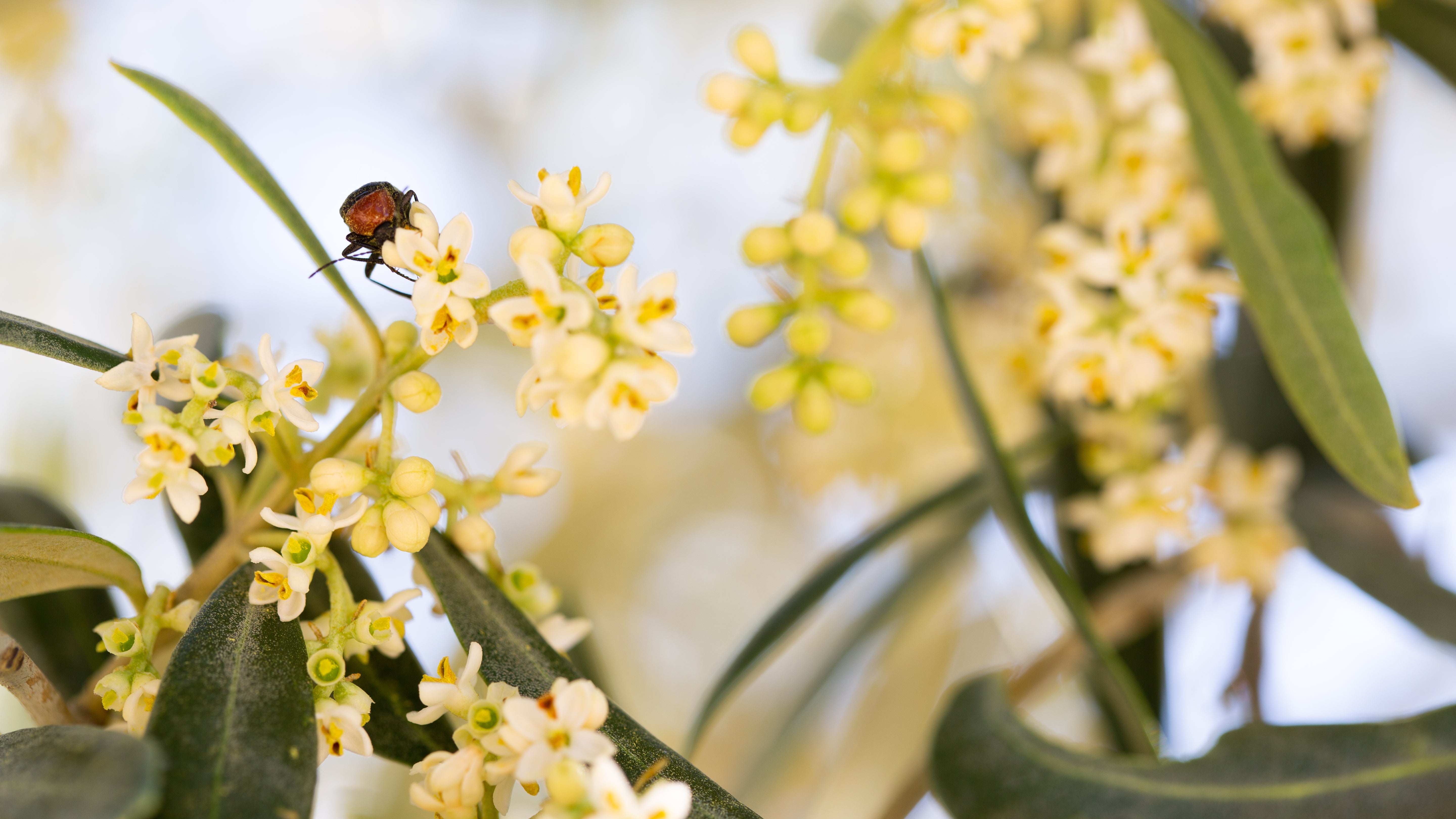
VISIBLE CALYX: This is visible when the floral buds open, and the flower cluster is formed. It is greenish-white and consists of four sepals.
VISIBLE COROLLA: This is the yellowish-white part seen when the floral bud swells and the calyx opens.
VISIBLE STAMENS: The olive flower is hermaphroditic, meaning it has both stamens and a pistil. Stamens are the yellow parts visible when the corolla of the flower opens.
FLOWERING: The olive flower is called a "rapa" (cluster), and the flowering stage is the most beautiful time for the olive tree... It begins in mid-May and lasts approximately one week for each flower. From the opening of the first flower to the last, about three weeks can pass. Once open, the wind carries the pollen to fertilize other flowers.
FRUIT SETTING: This would be the fertilized flower. Once the flower has set, the fruit formation process begins. It is a very delicate moment influenced by many internal and external factors that determine the upcoming harvest. It is a crucial and beautiful moment.
PIT HARDENING: This is a critical moment that requires great care for the tree in terms of nutrition. It occurs before the summer dormancy.
VERAISON: The anticipated moment... Once the fruit has formed, it changes from green to purple. That exact moment when it turns yellowish would be veraison, when there is the highest concentration of polyphenols in the olive. That would be the perfect time to harvest the olive and make a high-quality extra virgin olive oil. Each variety has different ripening times; for example, Arbequina and Frantoio are earlier than Picual or Cornicabra varieties.
At Almazara Deortegas, we seek this veraison moment to produce our organic extra virgin olive oils.
RIPENING: When the fruit has already turned dark purple. Oils made from mature olives will have very different nuances from those made from early harvest olives, likely yielding more but being less interesting. It will also depend, of course, on the stage of ripening, the health of the fruit, and its care during the process.