
Article: What is the SIQEV seal and how does it help you identify extra virgin olive oils with verified health properties?
What is the SIQEV seal and how does it help you identify extra virgin olive oils with verified health properties?
Not all extra virgin olive oils are created equal. The "extra virgin" label certifies the extraction process and the absence of organoleptic defects, but it says nothing about the nutritional composition of the oil you have at home.
That's where the SIQEV Healthy Seal comes in: the seal that certifies, with independent chemical analyses, that the EVOO bearing it meets the necessary conditions to legally and verifiably communicate its health benefits.
Deortegas organic extra virgins have obtained this certification. In this article, we explain exactly what it means, what the analyses measure, what European regulations say, and why it matters when you choose the oil you cook with every day.
What SIQEV is and who grants it
SIQEV stands for Sistema de Identificación y Qualificación de Extra Virgen (System for Identification and Qualification of Extra Virgin), a certification program promoted by QvExtra! International, an independent association of superior quality EVOO producers committed to transparency and nutritional excellence.
Unlike appellations of origin or organoleptic quality categories, SIQEV goes a step further: it requires the oil to exceed specific analytical thresholds in nutritional parameters for which there are officially recognized health claims by the European Union. If the analysis does not meet the minimums, the seal is not granted. It's that simple.
The result is the SIQEV Heart: a label that any consumer can see on the packaging and that clearly identifies whether the oil meets the conditions for the health properties recognized by European regulations.
 The three parameters measured by the SIQEV seal
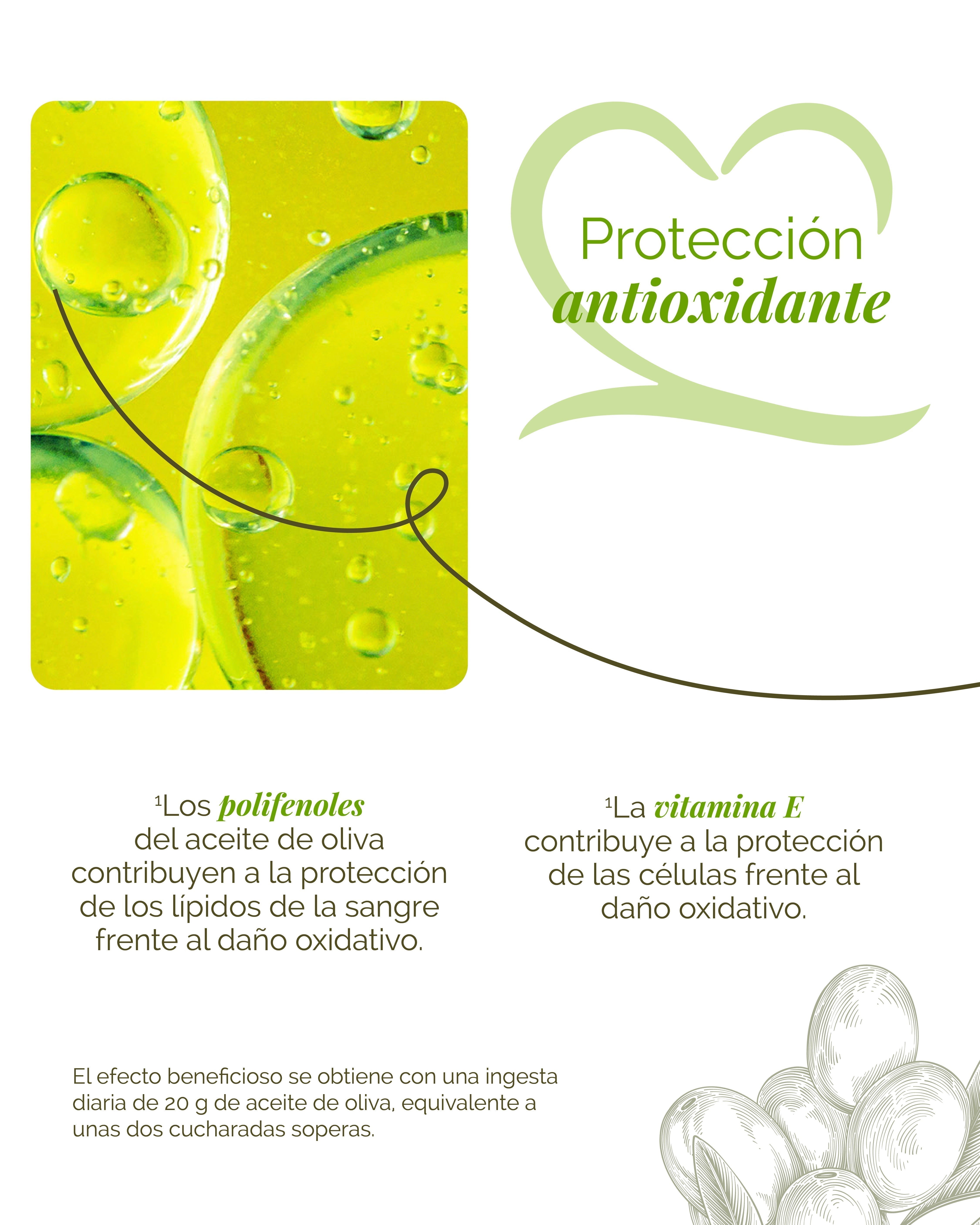
1. Polyphenols: antioxidant protection
Polyphenols are bioactive compounds naturally present in extra virgin olive oil. The most studied is hydroxytyrosol and its derivatives.
The European Union officially recognizes, through Regulation (EU) No 432/2012,
that olive oil polyphenols contribute to the protection of blood lipids from oxidative damage. The beneficial effect is obtained with a daily intake of 20 g of olive oil, equivalent to about 2 tablespoons.
The SIQEV seal analytically verifies that the oil reaches at least 5 mg of hydroxytyrosol and its derivatives per 20 g of oil, the threshold that enables this health claim.
2. Natural Vitamin E: well above the minimum
Vitamin E (tocopherol) is a fat-soluble antioxidant naturally present in olive oil. Regulation (EU) No 432/2012 recognizes that vitamin E contributes to the protection of cells from oxidative damage.
The minimum threshold required by the SIQEV seal is 1.8 mg of vitamin E per 100 g of oil (≥ 15% of the Nutrient Reference Value). Our EVOOs reach values between 10 and 20 mg per 100 g, i.e., between 5 and 10 times above the required minimum.
Why such a big difference? Because the concentration of vitamin E depends directly on the ripeness of the olive at harvest time and the extraction process. Harvesting at optimal ripeness — neither too green nor too ripe — and first cold extraction are the conditions that preserve these natural antioxidants intact.
3. Unsaturated fats: helps reduce cholesterol
The third parameter certified by SIQEV is the content of unsaturated fatty acids, which must exceed 70% of the total composition of the oil and contribute more than 20% of the total energy value.
This parameter has European regulatory backing: Regulation (EC) No 1924/2006 (Article 13.1) recognizes that replacing saturated fats with unsaturated fats in the diet contributes to reducing blood cholesterol.
High cholesterol is a risk factor for coronary heart disease. Heart diseases have multiple risk factors, and altering one of these risk factors may or may not have a beneficial effect.
Why it matters that all three parameters occur simultaneously
Many oils may meet some of the criteria. The SIQEV seal adds value because it requires all of them simultaneously and verifies them through independent analyses and audited controls, harvest after harvest.
This has a practical consequence: you can't buy the seal once and use it forever. Each production must pass the controls. If in any given year the composition does not reach the minimums — due to climatic conditions, changes in the process, or any other reason — the seal is not granted for that harvest. And if any deviation is detected, QvExtra!'s own monitoring system reports it.
It is, in short, a dynamic and renewed guarantee, not an honorary title granted only once.
What makes Almazara Deortegas different.
Deortegas extra virgins with the SIQEV Heart are produced in Yecla (Murcia), using their own olives. Traditional dryland cultivation located at an altitude of about 700m. These and other parameters, along with cold nights, contribute to the olives accumulating more polyphenols.
The process combines healthy fruit, harvesting at the optimal ripening moment, immediate transport to the mill, and first cold extraction — below 27 ºC — which preserves all the volatile, antioxidant, and nutritional compounds of the fresh fruit. The result is an oil with remarkable polyphenol richness, a vitamin E load far exceeding the minimums, and a lipid profile dominated by oleic acid.
How to read health claims on labels
European regulations are strict regarding health claims on food. Regulation (EC) No 1924/2006 establishes that only nutritional and health claims that have been evaluated and approved by EFSA (European Food Safety Authority) and included in Regulation (EU) 432/2012 can be used.
This means that when you read on a package with the SIQEV seal that the oil offers "Antioxidant protection" or "Reduces cholesterol," it is not advertising: these are claims backed by scientific evidence evaluated by the European Union's health authority, conditional on the oil meeting the analytical criteria.
Frequently asked questions about the SIQEV seal
Is SIQEV an appellation of origin? No. It is a nutritional quality certification independent of geographical origin. An oil can have an appellation of origin and not have SIQEV, and vice versa.
Can all extra virgin oils apply for the SIQEV seal? Technically yes, but in practice, only oils made with care at every stage of the process — variety, harvest, extraction, storage — will consistently achieve the required values.
How often is the certification renewed? Harvest by harvest. Batch by batch. Each batch receives certification and external in-line auditing up to the best-before date. The seal is not lifelong.
How much oil should I consume to benefit from the effects on polyphenols? The health claim approved by the EU refers to a consumption of 20 g of oil per day (approximately two tablespoons), which is the usual consumption in a standard Mediterranean diet.
Are the pungency and bitterness of EVOO related to polyphenols? Yes, directly. The pungency in the throat (which sometimes causes coughing) and the mild bitterness are sensory indicators of a high concentration of polyphenols, especially oleocanthal. They are not defects: they are signs of quality.
Conclusion: choose wisely
Extra virgin olive oil is one of the most studied foods by nutritional science and a pillar of the Mediterranean diet. But not all EVOOs are the same in their actual composition. The "extra virgin" label is a starting point, not a complete nutritional guarantee.
The SIQEV seal fills that void: it certifies, with independent analyses renewed each harvest, that the oil you bring to your table meets the criteria that the European Union has recognized as the basis for its healthy properties.
You can see this seal on Deortegas EVOOs. Not because we achieved it once and that's it, but because harvest after harvest, batch after batch, our oils pass the controls at the time of production. It is an honest guarantee for the consumer and our motivation to offer the best of our fruit every year.
A varied and balanced diet and a healthy lifestyle should be followed. Valid only in accordance with European Union regulations.
Polyphenols: Olive oil polyphenols contribute to the protection of blood lipids from oxidative damage. The beneficial effect is obtained with a daily intake of 20 g of olive oil, equivalent to about 2 tablespoons.Source of vitamin E: Vitamin E contributes to the protection of cells from oxidative damage.
Rich in unsaturated fats: The consumption of saturated fats increases blood cholesterol concentration. Replacing saturated fats with unsaturated fats in the diet contributes to reducing blood cholesterol. A high cholesterol level is a risk factor for coronary heart disease. Heart diseases have multiple risk factors, and altering one of these risk factors may or may not have a beneficial effect.
Regulation (EC) No 1924/2006 on nutrition and health claims made on foods. Regulation (EU) No 432/2012 establishing a list of authorized health claims.